
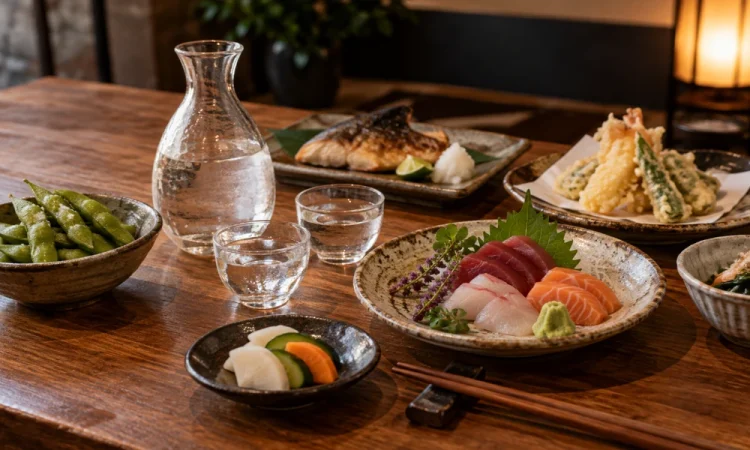
Sake can bring out flavors in food that may otherwise go unnoticed. It can soften salty tastes, balance rich sauces, and make delicate seafood seem a little sweeter. Still, sake food pairing does not need to feel like a complicated set of rules. A basic understanding of flavor and texture is usually enough to get started.
Japanese small plates make this especially fun. Since several dishes are shared during one meal, you can try different combinations without committing to a single pairing.
Begin With Lighter Flavors
A good rule is to match light sake with light food. Clean, fragrant varieties such as ginjo and daiginjo tend to work well with sashimi, chilled tofu, cucumber salad, and other delicate dishes.
These types of sake often have fruity or floral notes. Their gentle character supports raw fish without covering its natural taste. A dry ginjo, for example, may pair nicely with white fish sashimi or scallops.
Strong seasonings can hide those subtle flavors, though. If the table includes spicy sauces or heavily grilled food, it may be better to save the delicate sake for the beginning of the meal.
Pair Rich Food With Fuller Sake
Small plates such as pork belly, grilled chicken, miso-glazed fish, and beef skewers have deeper flavors. They often need a sake with more body.
Junmai sake is a dependable choice for this part of the meal. It commonly has earthy, rice-forward flavors and enough weight to stand beside rich foods. Its mild acidity can also help clean the palate after a fatty bite.
This is where sake food pairing becomes less about copying exact recommendations and more about finding balance. A rich dish may make a very light sake seem watery. A fuller sake, meanwhile, can hold its place without fighting the food.
Consider How the Dish Is Cooked
The main ingredient matters, but the cooking method can matter just as much. Steamed fish tastes very different from grilled fish, even when the same type of fish is used.
Grilled dishes usually develop smoky, toasted flavors. Junmai and yamahai-style sake can complement those stronger notes. Fried dishes, including tempura or karaage, often pair well with crisp, dry sake because the clean finish cuts through the oil.
For simmered dishes, look at the sauce. A sweet soy-based sauce may taste better with a sake that has some richness or gentle sweetness of its own.
Match or Contrast the Flavors
There are two simple approaches to sake food pairing. You can match similar flavors or use contrast.
Matching means pairing an earthy sake with mushrooms or a slightly sweet sake with a sweet glaze. The flavors feel connected, so the combination is usually calm and comfortable.
Contrast creates a different effect. A dry sake can balance a sweet sauce, while a bright and crisp sake may refresh the mouth after fried food. Both methods work. Honestly, experimenting is part of the enjoyment.
Do Not Forget Temperature
Sake can be served chilled, at room temperature, or warm. Temperature changes how it tastes and how it interacts with food.
Chilled sake usually feels crisp and refreshing. It is often a good partner for sashimi, salads, and lightly seasoned vegetables. Room-temperature sake may reveal more aroma and texture, making it useful with grilled or simmered dishes.
Warm sake can feel rounder and more comforting. It often pairs well with hot dishes such as yakitori, grilled mushrooms, hot pots, and braised meats. Not every sake should be heated, however, so it helps to check the serving suggestion when one is available.
Taste as You Go
When several Japanese small plates arrive together, begin with the mildest dish and gradually move toward stronger flavors. Take a bite, try a small sip, and notice what changes. Does the food taste sweeter? Does the sake feel smoother? Does one overpower the other?
There is no single perfect sake food pairing for every person. Taste is personal, and the same bottle may behave differently with each plate. Start with simple matches, stay curious, and let the meal guide you. That relaxed approach often leads to the most enjoyable pairings.
This post was written by a professional at Fortu. Fortu stands out among the top Restaurants St Petersburg FL, offering an elevated Pan-Asian dining experience in the heart of St. Petersburg, Florida. Celebrating Asia’s vibrant and diverse culture, Fortu introduces bright and bold flavors to a bright and bold city with a menu of locally and sustainably sourced options, from small bites to hearty delicacies. Whether winding down from a beach day or celebrating a special occasion, guests can enjoy a lush, alluring atmosphere and an authentic taste of Asia’s divine cuisine at one of the finest Steakhouse St Petersburg FL.